Pricing
 How it Works
 AI Writing
Planning Tools
Improvement Tools
Writing Tools
 About
About
words
Quota = 1500 words

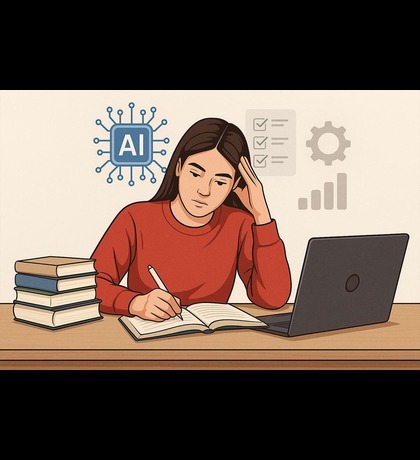
In the rapid pace of life these days, maintaining focus can seem like swimming against the tide against distractions, deadlines, and digital noise. If you're a university student navigating lectures and research or a high school student coordinating revision timetables, the issue is always the same: How do you keep a razor-sharp focus without exhausting yourself?
The solution is to utilize artificial intelligence (AI) to optimize your learning, eliminate mental noise, and build cognitive endurance. From intelligent task management to engaging learning assistance, AI-powered tools are revolutionizing the world for students who want better grades with less anxiety. In this article, we'll delve into practical, AI-powered productivity tricks specifically designed to heighten your academic concentration without making you a robot.
One of the easiest and most efficient methods to improve academic concentration is to start off with a personalized plan. Conventional lists of tasks tend to fail when tasks mount up, or your stamina varies during the day.
AI planners are more than simple time-blocking. They learn your routines, anticipate your productivity patterns, and dynamically adjust schedules. For example, if you find you're more focused in the morning, an AI tool can automatically allocate more demanding cognitive tasks, such as reading or writing, to those times while reserving lighter tasks for the afternoon.
This strategy lessens the mental load and ensures that your mental energy is well invested, not squandered trying to determine what to do next.
Let's have it straight: reading research papers, textbooks, and academic articles for hours can be mentally draining. But what if you could intake the same material and take a stroll or rest your eyes?
That is where text to speech solutions enter the picture. By turning written content into natural-sounding audio, these AI-assisted solutions make it convenient to learn in various settings and minimize screen fatigue. Be it rehearsing lecture slides, research papers, or even one's own essays, listening to the content aids stronger recall while giving your eyes and posture a break.
The change from passive reading to hearing also accommodates other learning styles, making the information easier to digest and increasing the level of engagement.
Active recall is the most efficient way of studying, but it needs to be constantly reviewed and recalled. Preparing flashcards by hand or note-taking may consume hours. That's when AI is useful.
Note-taking apps powered by AI can summarize lectures in real time, create abridged content, and even propose potential quiz questions based on your notes. Some apps employ natural language processing (NLP) to identify key terms, common themes, or challenging concepts that you may have overlooked.
With this type of assistance, your study notes shift from passive reading documents into active learning tools, encouraging improved long-term retention.
External noise is not only literal. Social media, email alerts, and even the temptation of online amusement can erode your study time. AI-based concentration tools can now exclude digital distractions with sinister accuracy.
Certain apps are able to sense when you're losing focus on your work (due to idle keyboard time or tab switching) and gently push you back on track with reminders. Others prevent access to distracting sites of your choice during scheduled study times and give you real-time feedback on your productivity patterns.
Consider these apps as virtual accountability buddies.
Scholarly writing demands clarity, coherence, and discipline. These habits may take years to learn. Yet AI is filling in the gap much more quickly. Writing assistants now do more than simple grammar checking; they review sentence flow, recommend different phrasing, and even gauge tone suitability based on your level of academia.
You can also utilize these tools to prepare essays, structure arguments, and develop citation-perfect bibliographies - all without worrying about formatting.
All that being said, it's crucial to preserve authorship. AI should augment, not displace, your original ideas. Used responsibly, these tools can alleviate writing anxiety and keep you in a state of high concentration for longer periods.
Spaced repetition is a highly researched memory retention technique, particularly for topics involving heavy memorization. AI flashcard makers are able to instantly transform your notes or uploaded content into quizzes or computer-based flashcards, eliminating the effort required in the manual process.
Better still, some websites employ your response history to reorder cards you consistently answer incorrectly, practicing hard concepts more intensively. This keeps you constantly challenging yourself at precisely the right level without lapsing into passive study.
AI applications are very powerful when it comes to providing the proper conditions for academic concentration, but they are no magic bullets. The foundation of each productivity system is a desire to develop, remain disciplined, and adjust.
Used well, these can assist you in taking back mental space, conquering procrastination, and revolutionizing the way you interact with your studies. The secret is equilibrium. Let machine learning do the drudge work where it's best so your mind can focus on what it does best: think, question, and innovate.

WRITTEN BY
Cathy Aranda (Mass communication, Marketing, and Public Relations)
Cathy is a highly dedicated author who has been writing for the platform for over five years. With a Master's degree in Mass Communication, she is well-versed in various forms of writing such as articles, press releases, blog posts, and whitepapers. As an essay writing guide author at PerfectEssayWriter.ai, she has been helping students and professionals improve their writing skills by offering practical tips on research, citation, sentence structure, and style.
Cathy is a highly dedicated author who has been writing for the platform for over five years. With a Master's degree in Mass Communication, she is well-versed in various forms of writing such as articles, press releases, blog posts, and whitepapers. As an essay writing guide author at PerfectEssayWriter.ai, she has been helping students and professionals improve their writing skills by offering practical tips on research, citation, sentence structure, and style.
On This Page On This Page

 Profile
 Logout